

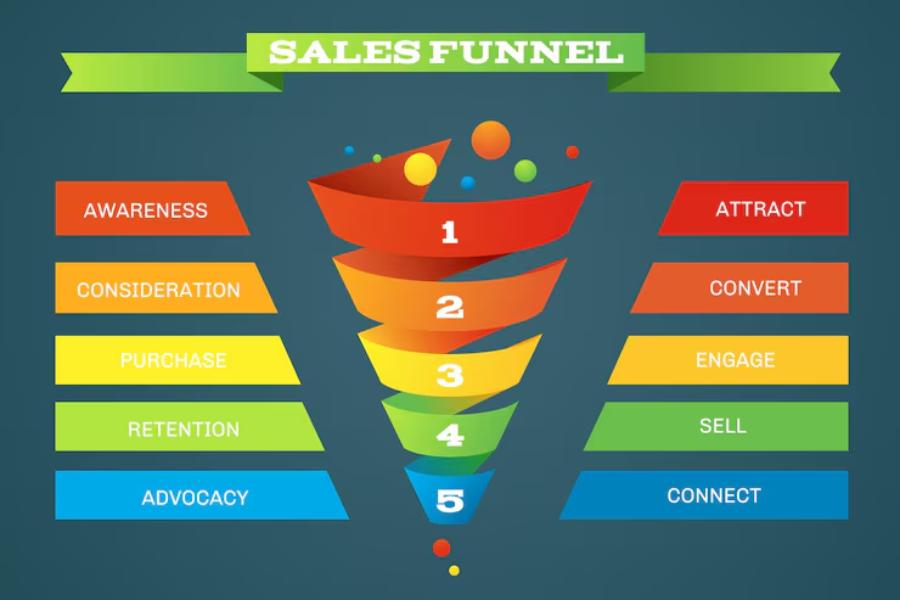
The funnel is no longer a ladder. It is current.
Funnels used to be steps. Now they are flowing.
Buyers don’t descend anymore. They drift, loop, pause, compare, disappear, return, and sometimes surge straight to a decision in a single session.
The linear funnel is collapsing under real behavior. Multi-session journeys have replaced neat stage progressions. Urgency is no longer accidental timing. It is engineered timing.
Yet most lifecycle funnels still run on:
- Stage labels
- Fixed delays
- Fragmented campaigns
Modern Klaviyo-led funnel systems look different. They are signal-driven. Adaptive. Urgency-aware.
In 2026, high-performing agencies don’t win by adding more funnel stages. They win by designing funnel-flux systems that capture, amplify, and convert early awareness into urgency-driven deal momentum.
The funnel didn’t break. It started moving.
Let’s cut to the chase and figure out how a Klaviyo marketing agency moves from early awareness to urgent deal conversions using funnel flux.
Why traditional funnel models fail in modern lifecycle marketing
Traditional funnels assume predictability.
Awareness → consideration → decision.
Fixed order. Fixed timing. Fixed message progression.
Reality disagrees.
On the other hand, modern buyers:
- Jump stages
- Revisit products
- Compare across devices
- Re-enter after silence
Static funnels create timing mismatches. Decision emails land before evaluation. Urgency messages arrive after interest cools.
The system fires correctly. The moment is wrong.
This creates friction disguised as automation:
- Premature offers
- Late nudges
- Misaligned pressure
First things first. What does funnel flux actually look like?
What funnel flux means in a Klaviyo-driven lifecycle system
Funnel flux replaces stages with states.
Not where the buyer should be, but where signals show they are.
Common states include:
- Interest state
- Evaluation state
- Readiness state
Time delays are replaced with signal triggers. Behavior becomes the clock.
Instead of “wait three days,” the logic becomes: “When evaluation signals appear, move forward.”
Campaign sequences evolve into adaptive flows. Paths shift with momentum. Messaging adjusts with behavior density.
Funnel flux is a dynamic lifecycle model in which customer movement is driven by live behavioral signals rather than predefined stage timing.
It doesn’t push the buyer forward. It moves with them.
Now, let’s see why Klavioy is the right fit for designing your funnel flow.
Why Klaviyo is structurally suited for funnel flux design
Flux needs signals. Signals need infrastructure.
Klaviyo’s lifecycle architecture is built around real-time event tracking:
- Browse behavior
- Cart signals
- Product interest
- Engagement events
Unified customer profiles accumulate behavior across sessions, not just single visits. That creates continuity.
Flow logic supports conditional branching and dynamic splits. Which means paths can change mid-journey in response to new signals, not just at entry.
This matters.
Because funnel flux requires motion-aware messaging. Not milestone-only messaging.
But what roles does a Klaviyo marketing agency play in funnel flux? Let’s find out.
Role of a Klaviyo marketing agency in funnel flux architecture
Agencies are no longer just flow builders. They are funnel engineers.
| Past Model | Future Model |
| Build a welcome flow | Engineer state transitions |
| Build abandon flow | Model urgency thresholds |
| Launch promo flow | Design pressure governance |
Strong agencies design signal hierarchies:
- Which behaviors indicate momentum
- Which signals justify urgency
- Which signals suppress pressure
In-house teams often struggle here, not from lack of skill, but from overload:
- Too many signals
- Too many logic paths
- Too much testing burden
Flux design is not about more branches. It is about smarter signal weighting.
Mapping early awareness signals to mid-funnel momentum
Early awareness signals are quiet.
They look like:
- First browse
- Content engagement
- Category exploration
They are not buying signals. They are curiosity signals.
Momentum-building responses should match that energy:
- Educational flows
- Use-case content
- Social proof sequences
Then come micro-conversions:
- Quiz completion
- Preference capture
- Wishlist adds
Each micro-action amplifies signal strength.
Now, let’s build urgency in conversions without compromising on the trust built.
Engineering urgency without destroying trust
Urgency should emerge from behavior, not marketing impatience.
Healthy urgency triggers include:
- Repeat visits
- Price checks
- Cart revisits
Dynamic urgency mechanisms can then activate:
- Stock signals
- Time-bound incentives
- Usage-based offers
But urgency needs governance.
Pressure frameworks include:
- Urgency frequency caps
- Cool-down windows
- Trust preservation rules
Because overused urgency stops feeling helpful and starts feeling manipulative.
Urgency deal dominance layer in modern funnels
Deal dominance is about timing the offer to intent peaks.
Offer timing improves when triggers align with:
- Engagement spikes
- Evaluation density
- Return-session clustering
Channel escalation becomes conditional: Email → SMS → push, based on responsiveness, not habit.
Offer framing also adapts:
- Margin-aware incentives
- Behavior-sized discounts
- Context-based bundles
Last-mile friction gets engineered out:
- Simplified checkout
- Reminder sequencing
- Objection-address messaging
Dominance is not louder deals. It is precisely timed deals.
But let’s see how to measure the conversion in these kinds of flux systems.
Measurement in funnel flux systems: From traditional to modern
Old funnel metric: stage conversion. New funnel metric: state velocity.
Flux measurement tracks:
- Time between signals
- Momentum acceleration
- Behavior clustering
New metrics include:
- Intent score lift
- Urgency response rate
- Momentum decay rate
Flow-level indicators matter more:
- Signal-to-conversion ratio
- Urgency-trigger yield
Performance is no longer judged by step completion, but by movement speed and direction.
But things won’t always be the way you want them to be. You may face some challenges or make some mistakes as well.
Common mistakes brands make when modernizing funnels
The most common mistake: layering signals on top of stage funnels.
Complexity increases. Adaptability doesn’t.
Other frequent failures:
- Over-triggered urgency
- No fatigue controls
- No suppression logic
Results show up quickly:
- Distrust
- Opt-outs
- Offer blindness
Pressure collisions are especially dangerous, as multiple urgency messages from different flows can stack in the same window.
Now, the most important part: How to find the right Klaviyo partner to help you traverse the testing waters of funnel flux design?
Let’s find out.
How to choose a Klaviyo marketing agency for funnel flux design
Flow count is not a capability. Templates are not a strategy.
Look for agencies that can explain:
- Signal modeling
- Urgency frameworks
- Momentum metrics
Ask directly:
- How do you define funnel states from behavior?
- How do you engineer urgency safely?
- How do you measure momentum, not just conversion?
Also, here are a few red flags to look out for:
- Template-only flows
- No signal hierarchy
- No urgency governance
A real partner designs motion, not just messages.
Wrapping up
That brings us to the business end of this article, where it’s fair to say that the winning funnel does not push harder; it flows smarter.
The shift is complete.
- From stages to states.
- From schedules to signals.
- From pressure to momentum.
In 2026, the funnel that wins will not be the one that shouts the loudest, but the one that listens fastest and moves when the buyer moves.