

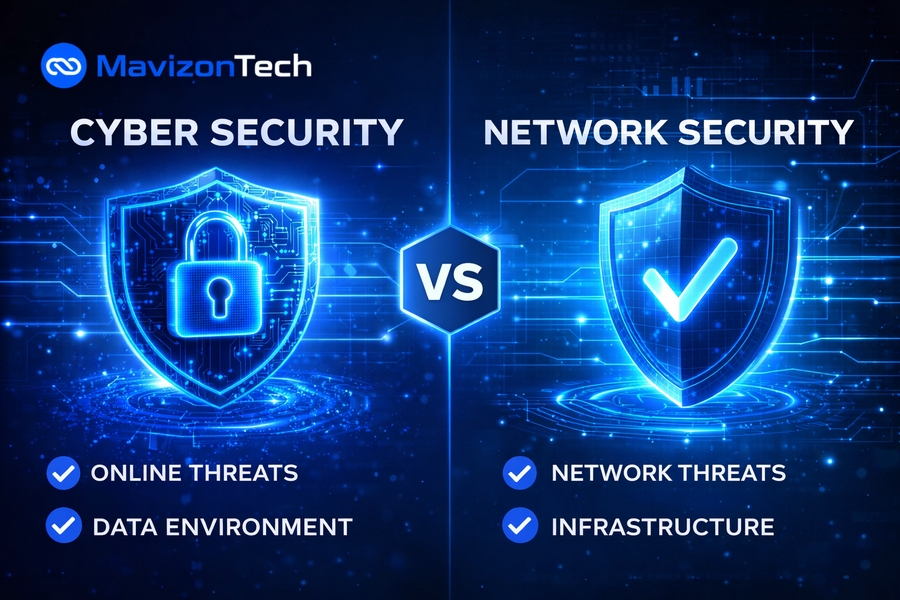
In today’s increasingly connected world, understanding the difference between cybersecurity and network security is crucial. Both are essential in safeguarding data, networks, and systems from cyber threats, but they focus on different aspects of protection.
Cybersecurity is a broad discipline that covers all aspects of digital security, while network security is a subset of cybersecurity focused on protecting the infrastructure. Let’s delve deeper into these fields and learn how they complement each other.
What is Network Security?
Network security refers to the measures taken to protect an organization’s network infrastructure from unauthorized access, attacks, and disruptions. This includes tools and processes designed to safeguard the integrity of the network, its devices, and the data being transmitted across it. It focuses on perimeter defense, ensuring that only authorized users and devices can access the internal network.
One key component of network security is the use of firewalls to monitor and control incoming and outgoing network traffic in accordance with predefined security rules. Network security also employs VPNs (Virtual Private Networks) to create secure communication channels over less secure networks like the internet. As businesses rely more heavily on cloud solutions, network segmentation has become a vital part of network security. Dividing a network into smaller, isolated segments reduces the attack surface for potential intruders.
For a more detailed understanding of the security principles involved in network protection, consider learning about what is CIA in cyber security. This will help you understand the Confidentiality, Integrity, and Availability model that is crucial to both network and cyber security.
Cyber Security: A Broader Approach to Digital Protection
Cyber security encompasses a broader range of practices designed to protect not only the network infrastructure but also the data, applications, and systems that run on it. While network security specifically targets the protection of networks, cyber security covers all digital assets and focuses on mitigating cyber threats like malware, ransomware, phishing attacks, and data breaches.
Cyber security involves multiple layers of defense that work together to provide comprehensive protection. This includes securing endpoints, applications, data, and networks. Unlike network security, which deals with access control at the perimeter, cyber security uses a multi-faceted approach that involves threat detection, response to incidents, and proactive security measures such as encryption and identity management.
The importance of having robust cyber security practices in place cannot be overstated, as it directly impacts a company’s reputation and trustworthiness with clients. To explore more on security in the cyber world, you might want to understand the significance of what is vishing in cyber security, which targets people through social engineering tactics.
Network Security vs Cyber Security: How They Differ
While the terms “network security” and “cyber security” are often used interchangeably, they are distinct in their areas of focus. Network security is a subset of cyber security, specifically aimed at protecting the network infrastructure from cyber threats. It focuses on ensuring the network remains intact, functional, and free of interference. On the other hand, cyber security takes a more comprehensive approach, addressing risks to the network, but also focusing on securing data, applications, and systems across the entire digital environment.
The key difference between these two security practices is their scope. Network security primarily involves protecting the hardware, devices, and data transmission pathways that comprise the network. Cyber security, however, spans broader activities that protect critical data, software applications, and even the users themselves.
As businesses grow increasingly reliant on digital tools, understanding these nuances is essential to building a secure, resilient IT infrastructure. If you’re wondering about the various aspects involved in securing data, check out more about what is non-repudiation in cyber security, a critical concept for data security.
The Importance of Cyber Security and Network Security for Business
In today’s digital era, both cyber security and network security are vital for protecting an organization’s assets, reputation, and intellectual property. Businesses today face a wide range of cyber threats, from ransomware attacks that lock down critical systems to data breaches that expose sensitive customer information. It’s not just enough to have strong network security to prevent unauthorized access to the network; businesses also need comprehensive cyber security measures that cover everything from end-user devices to cloud-based services.
For businesses operating in sectors where compliance is critical, implementing a robust security framework is non-negotiable. Network security and cybersecurity work together to help organizations meet legal and regulatory standards for data protection. Moreover, adopting a hybrid security approach that includes both network and cyber security practices ensures the integrity and confidentiality of sensitive business data.
To learn more about the evolving nature of cyber threats and network security solutions, consider reading more on what is risk management in cyber security, which outlines strategies for assessing and managing cyber risks.
Integrating Network Security into a Cyber Security Framework
The integration of network security into a broader cyber security framework ensures that both the network and the systems using it are secure. Network security provides the foundational protections by securing the network infrastructure and controlling access to critical assets. Cyber security, with its comprehensive approach, builds on this foundation by securing all components that rely on the network, including applications, endpoints, and cloud services.
This integration provides a holistic security posture that addresses all possible vulnerabilities and security threats from both internal and external sources. By integrating the two, businesses can ensure that their security strategy is more effective at detecting and responding to threats. Combining these security practices also provides the ability to analyze network traffic alongside application behavior, improving the ability to detect and prevent advanced threats such as zero-day vulnerabilities.
As part of securing all components, one should look at how organizations approach aspects such as data encryption and access control, which are core to maintaining security. Read more on how to secure critical infrastructure in what is nmap in cyber security.
Conclusion: Securing Your Digital World with Cyber Security and Network Security
In conclusion, both cyber security and network security are indispensable to maintaining a secure digital infrastructure. While network security addresses the protection of network components and access control, cyber security takes a more comprehensive approach, securing data, applications, and endpoints. Together, they create a layered defense mechanism that helps businesses prevent, detect, and respond to cyber threats. Businesses should ensure that they adopt both network and cyber security practices to create a resilient and secure environment for their operations.
Understanding the differences and synergies between these two domains is essential to ensuring that your business remains secure and compliant with industry standards. The integration of both network and cyber security practices provides a strong foundation for defending against the growing number of digital threats faced by organizations across all sectors.