

The importance of data in our digital age cannot be overstated. With the rise of online platforms, the collection and storage of personal information has become central to businesses, governments, and other entities.
This has led to the development of concepts like data privacy and data security, which are critical for protecting sensitive information. Although they sound similar, these two terms have distinct meanings and practices.
What is Data Privacy?
Data privacy refers to the rights and policies that govern how personal information is collected, stored, and shared. It centers on ensuring that individuals have control over their personal data and that it is not misused by organizations or third parties. Laws such as the General Data Protection Regulation (GDPR) in the EU and the California Consumer Privacy Act (CCPA) in the U.S. enforce strict guidelines for the handling of personal information. These regulations ensure that individuals can access, correct, and delete their data when needed.
A key aspect of data privacy is the informed consent process. Organizations must clearly explain to users what data they are collecting and why. By implementing robust privacy policies, businesses ensure transparency and build trust with their customers. For instance, when a user signs up for a service online, they must be informed about what data will be stored, how it will be used, and for how long it will be retained.
By understanding what is involved in data privacy, individuals can feel more secure knowing that their personal data is handled responsibly. If you’re curious about the importance of what is CIA in cyber security, you can find more insights on how confidentiality, integrity, and availability relate to the protection of data.
What is Data Security?
Data security, on the other hand, focuses on protecting data from cyber threats such as hacking, data breaches, and unauthorized access. While privacy centers on how data is handled, security focuses on safeguarding data from internal and external threats. To ensure data security, organizations use a variety of technical and administrative measures such as encryption, firewalls, and multi-factor authentication.
The primary goal of data security is to protect data confidentiality, integrity, and availability (CIA). This concept refers to ensuring that data remains private (confidential), unaltered (integrity), and accessible when needed (availability). Without a solid security framework, no amount of privacy protection can be effective, as hackers could steal or manipulate personal information.
For businesses, implementing security protocols is essential not only for protecting their assets but also for complying with industry regulations. These measures prevent costly data breaches, protect against reputational damage, and ensure that clients’ sensitive information is safe. Learn more about the fundamental principles of cybersecurity by exploring how what is vishing in cyber security can impact data security.
Key Differences Between Data Privacy and Data Security
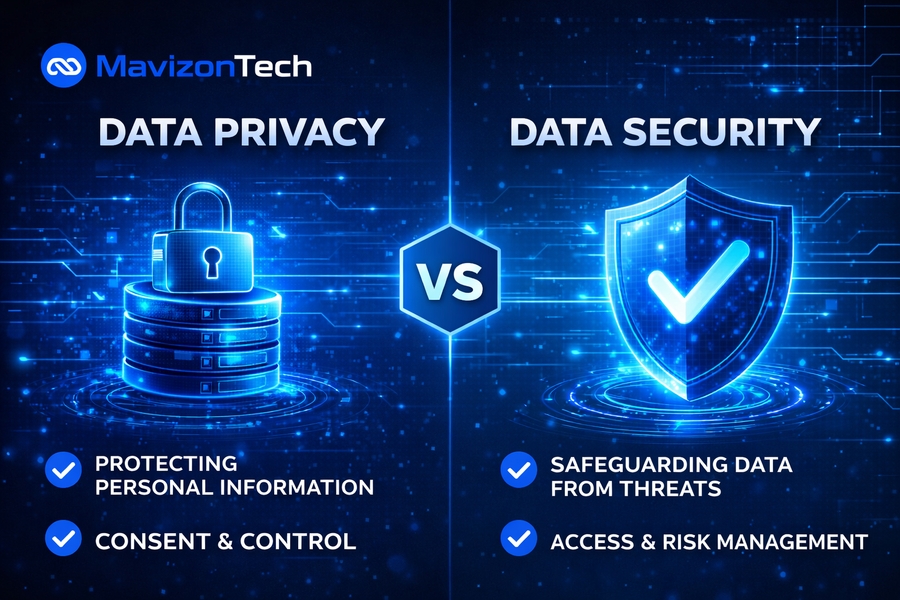
While both data privacy and data security aim to protect sensitive information, they do so in different ways. Data privacy primarily addresses the legal and ethical use of data, while data security focuses on preventing unauthorized access and ensuring data is protected from external attacks.
- Scope of Protection: Data privacy focuses on individuals’ rights and the handling of their data, ensuring that consent is obtained for its use. Data security focuses on the measures used to protect data from unauthorized access or corruption.
- Key Practices: Data privacy involves creating and enforcing privacy policies, obtaining consent, and ensuring compliance with privacy laws. Data security practices include encryption, firewalls, and advanced technologies to secure data.
- Regulation: Data privacy is governed by laws such as the GDPR and CCPA, which provide individuals with rights over their personal data. Data security is guided by standards like ISO 27001 and the NIST Cybersecurity Framework, which outline best practices for protecting data systems.
Thus, while the two concepts are closely related, organizations must address both privacy and security to fully protect data. You can explore how protecting sensitive data ties into data privacy by reading about what GDPR in cyber security means ensures compliance with privacy regulations.
Why Both Are Important
The protection of data is paramount for businesses and individuals alike. A data breach can result in severe consequences, including financial loss, legal ramifications, and damage to reputation. Organizations must, therefore, implement both robust data privacy policies and stringent data security measures. This approach not only safeguards personal information but also builds consumer trust and ensures long-term success.
Companies that fail to prioritize data privacy and security risk facing legal penalties, loss of customers, and reputational damage. On the other hand, organizations that get it right can reap the benefits of loyal customers, regulatory compliance, and a secure digital environment.
As data protection laws evolve, it is important for businesses to stay up to date with the latest regulations to remain compliant. Understanding the intricate relationship between data privacy and security can help companies manage their data more effectively and proactively prevent potential breaches.
How to Ensure Data Privacy and Data Security in Your Organization
To effectively safeguard both privacy and security, organizations must integrate both aspects into their data management strategies. A multi-layered approach that incorporates both policies and technology is essential. For privacy, businesses must ensure that they have a comprehensive data protection policy, conduct regular audits, and establish clear consent processes.
On the security front, organizations should invest in technologies such as encryption, endpoint protection, and secure data storage. Regular vulnerability testing, incident response planning, and employee training on security best practices are critical for maintaining a robust security posture.
Additionally, the growing concern over cyber threats such as ransomware has made it even more crucial for organizations to strengthen their security frameworks. Learn more about effective cybersecurity strategies by examining how how much do cyber security jobs pay and how the industry is adapting to meet growing demands.
Data Privacy and Data Security in the Digital Age
With the increasing volume of data being generated and shared online, both data privacy and security are more important than ever. The rise of cloud computing, big data, and the Internet of Things (IoT) has created new challenges for organizations in terms of protecting sensitive information.
As more individuals and businesses interact in the digital space, it is crucial to implement both privacy and security measures to protect data from exploitation. By using advanced encryption technologies and adhering to strict privacy policies, organizations can build trust with their users and customers, ensuring the safe handling of their personal information.
With the ongoing development of new privacy laws, data protection will continue to evolve, and businesses must stay informed to ensure compliance. By focusing on both data privacy and security, organizations can build stronger, more secure digital platforms that benefit all stakeholders.
The Future of Data Privacy and Data Security
As we move further into the digital age, the future of data privacy and security looks promising, but challenges remain. New technologies such as artificial intelligence, machine learning, and blockchain are being integrated into data security systems to offer better protection and more efficient data management. These technologies promise to enhance both privacy and security by automating risk assessments, detecting anomalies, and providing greater control over sensitive data.
At the same time, privacy laws will continue to evolve in response to emerging threats and new forms of data exploitation. Governments and regulatory bodies will play a critical role in shaping how organizations protect personal data and ensure compliance with new regulations.
The growing awareness among individuals about their privacy rights will likely lead to a demand for more transparency and control over personal data. Businesses that prioritize both data privacy and security will be better positioned to meet these expectations, ensuring that their users’ data is safe and respected.
Conclusion
In conclusion, understanding the difference between data privacy and data security is essential for organizations looking to protect sensitive information. While privacy ensures that individuals’ rights are respected and their data is handled ethically, security focuses on safeguarding that data from unauthorized access and cyber threats. To build a trustworthy and secure digital environment, businesses must implement both robust data privacy policies and advanced data security measures. With the rapid growth of digital technologies and the increasing volume of data being shared online, the importance of both concepts will continue to grow.
By prioritizing both aspects, businesses can not only comply with legal regulations but also foster long-term trust with their customers. Ensuring that both data privacy and security are well-managed will provide a competitive edge and safeguard the organization’s reputation in an increasingly data-driven world.